
- November 12, 2026
- harshaCancerCare
- Comment: 0
- Blog
Lung Cancer Treatment: Targeted Therapy and Immunotherapy
Lung cancer treatment has changed a lot in recent years. Doctors still use surgery, chemotherapy and radiation. However, two newer options, targeted therapy and immunotherapy, now help many patients. This guide explains in simple words how they work and who may benefit.
## Why does lung cancer treatment differ from person to person?
Doctors divide lung cancer into two main types. Non-small cell lung cancer is the most common. Small cell lung cancer is rarer but grows faster. Within the first type, tumours can carry different gene changes. Because of this, two patients with the same stage may need very different care. Therefore, doctors test the tumour sample before they choose a plan. This test is called molecular or biomarker testing. It helps your oncologist pick the lung cancer treatment that fits your tumour best, instead of relying on chemotherapy alone.
## What is targeted therapy?
Targeted therapy uses medicines that act on specific changes inside cancer cells. These changes help the cells grow. Common examples include changes in the EGFR, ALK and ROS1 genes. Many of these medicines come as tablets, so patients can take them at home.
Chemotherapy works differently. It acts on all fast-growing cells, including some healthy ones. Targeted therapy, on the other hand, focuses on particular features of the cancer cell. Side effects also differ. You may notice a skin rash, loose stools, mouth sores or tiredness. Your doctor will tell you how to manage each one.
Only patients whose tumour test shows a matching change can use these medicines. That is why a biopsy sample and molecular testing matter so much at the start.
## What is immunotherapy?
Your immune system normally spots and attacks abnormal cells. Cancer cells, however, can sometimes hide from it. Immunotherapy medicines help the immune system find and attack the cancer. Doctors often call them immune checkpoint inhibitors.
Patients receive immunotherapy as an infusion at regular intervals. Most visits take place in a day-care setting. A test called PD-L1 on the tumour sample helps doctors judge how well it may work. In some patients, doctors combine it with chemotherapy.
Because the medicine wakes up the immune system, it can sometimes affect healthy organs. The skin, bowel, liver, lungs or hormone glands may become inflamed. Doctors can usually manage these problems when you report them early. So tell your care team about any new symptom without delay.
## Do other lung cancer treatment options still matter?
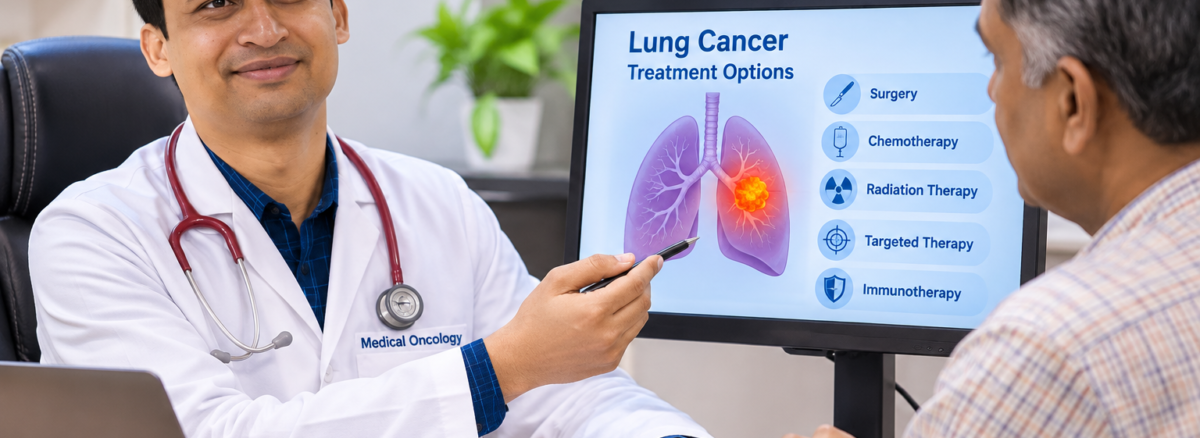
Yes, they do. Targeted therapy and immunotherapy do not replace other treatments for everyone. Surgery or radiation may help treat some early-stage cancers. Chemotherapy remains important for many patients, either alone or with immunotherapy. Your oncologist will build a plan after looking at these factors:
– The type and stage of your cancer
– Your molecular and PD-L1 test results
– Your age, fitness and other illnesses
– Personal wishes and goals
## How do doctors decide the right lung cancer treatment?
First, the doctor reviews your scans and test results. Then a team meets to discuss your case. Surgeons, radiation doctors and medical oncologists all share their views. After that, your oncologist explains the plan in plain words. You can ask questions at any step. Also, you may take a second opinion if you wish. Good doctors welcome this.
## What should you expect during lung cancer treatment?
Treatment is a journey, so expect regular contact with your care team. You will have blood tests and scans to check how the cancer responds. In addition, follow-up visits help control side effects early. Good support also matters. Also, tell your team if side effects trouble you, because early help works best. Nutrition advice, pain relief and emotional care all improve how you feel during treatment. Many families find it helpful to bring a relative to each visit.
## When should you talk to an oncologist?
If you or a family member has a lung cancer diagnosis, ask one question first. Has anyone tested the tumour sample for gene changes and PD-L1? The answer can open up treatment options that suit your case. If you feel unsure, ask for the plan in writing. A clear plan early on is always better than waiting. Moreover, a second opinion can add confidence when the choices feel complex.
## Lung cancer treatment: common questions
Is targeted therapy better than chemotherapy? Not for everyone. It works only when the tumour has a change that the medicine can act on. Your oncologist will decide what suits you.
Does immunotherapy suit every patient? No. It depends on the cancer type, stage, test results and your general health.
Are these treatments painful? Targeted tablets need only a glass of water, and immunotherapy goes in through a drip. Side effects vary, and timely care can control most of them.
What if my tumour shows no matching change? Then chemotherapy, immunotherapy or both may still help. Your oncologist will explain which one fits best.
Can I work during treatment? Many people can, but it depends on the treatment and how you feel. Talk to your doctor before you decide.
How long do these treatments last? The length depends on how the cancer responds and how well you tolerate the medicine. Your doctor will review this regularly.
Book a visit with Dr. Harshavardhan Annadanam, medical oncologist, to discuss a personal lung cancer treatment plan.