
- November 9, 2026
- harshaCancerCare
- Comment: 0
- Blog
Lung Cancer Symptoms: 7 Early Signs Not to Ignore
Lung cancer symptoms often begin quietly. Many people blame them on pollution, smoking or a seasonal cold. As a result, they wait for months before they see a doctor. November is Lung Cancer Awareness Month, so it is a good time to learn the signs. Early diagnosis gives you more treatment options.
## What are the main lung cancer symptoms?
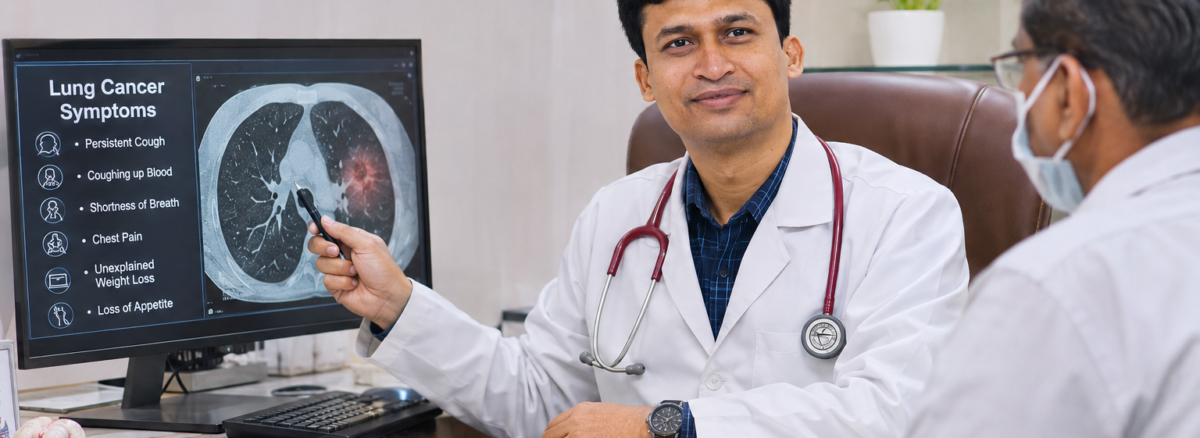
Doctors see the same warning signs again and again. However, each sign can also point to a less serious problem. For that reason, a proper check-up matters more than guessing. Here are the seven signs to watch for.
1. A cough that does not go away. A cough that lasts more than three weeks needs attention. Also, watch for a cough that gets worse or changes its sound. Many people treat it at home for months, and that delay costs valuable time.
2. Coughing up blood. Even a small amount of blood in your sputum is a warning sign. Infections can cause it too. Still, you should never ignore it.
3. Breathlessness or wheezing. Do you feel breathless on the stairs? A tumour or fluid around the lung can narrow the airways. Therefore, any new breathing trouble deserves a check.
4. Chest, shoulder or back pain. Pain that gets worse when you cough or breathe deeply can be a sign. Pain without an obvious injury also needs a check.
5. A hoarse voice. Do not ignore a hoarse voice that lasts more than two or three weeks, especially when you have no cold. Sometimes a lung problem presses on the nerve near the voice box.
6. Weight loss and tiredness. Losing weight without dieting is a red flag. Similarly, constant tiredness and poor appetite can signal a serious illness.
7. Repeated chest infections. Frequent bronchitis or pneumonia may point to a blockage. If the infection keeps returning in the same part of the lung, ask your doctor for a scan.
## Who faces a higher risk of lung cancer?
Smoking remains the biggest risk factor. However, lung cancer does not affect smokers alone. Many non-smokers develop it as well. These groups face a higher risk:
– Current and former smokers, including people who breathe second-hand smoke
– People who live with heavy air pollution or cooking smoke
– Workers who handle dust, chemicals or asbestos
– Those with a family history of lung cancer
– Patients who had radiation to the chest earlier
## How can you lower your risk?
Quit smoking, because stopping helps at any age. Also, avoid second-hand smoke at home and at work. Next, wear a mask in dusty places and use cleaner cooking fuel when you can. Keep your home well ventilated, too. Knowing the lung cancer symptoms also helps you act early. Finally, ask your doctor about screening if you are a long-term heavy smoker above the age of 50. Small steps like these add up over time.
## What happens at your first visit?
The doctor first asks about your symptoms and habits. Next, the doctor checks your chest and general health. Then you may need a few tests on the same day. For example, a chest X-ray often comes first. If the X-ray looks unusual, a CT scan usually follows. Meanwhile, bring your old reports and a list of your medicines. These details save time and help the doctor reach a clear plan. Also, bring a family member for support.
## How do doctors diagnose lung cancer?
A medical oncologist starts with your history and a physical exam. Then the doctor orders tests such as a chest X-ray and a CT scan. A biopsy confirms the diagnosis because it shows the exact cancer type. In addition, modern labs test the tumour sample for biomarkers. These results help the doctor decide whether targeted therapy or immunotherapy can help you.
## What treatments are available?
Treatment depends on the cancer type, the stage and your general health. Options include surgery, chemotherapy, radiation, targeted therapy and immunotherapy. Doctors often combine two or more of them. Moreover, a team of specialists plans your care together, so you receive a balanced plan.
## When should you see a doctor about lung cancer symptoms?
See a doctor if a cough lasts more than three weeks. Go sooner if you cough up blood, lose weight without a reason, or feel more breathless each week. Many of these lung cancer symptoms also appear in tuberculosis and other infections. Therefore, only proper tests can tell the real cause. Do not wait until the symptoms become severe. Early action gives you the widest choice of treatments.
## Lung cancer symptoms: common questions
Is a long cough always lung cancer? No. Infections, asthma, TB and allergies cause most long coughs. Still, any cough beyond three weeks needs a check.
Can doctors detect lung cancer early? Yes, when you report symptoms promptly. For people at high risk, a doctor may suggest a low-dose CT scan.
Do non-smokers get lung cancer? Yes. Pollution, passive smoking, workplace exposure and genes all play a role.
Can TB look like lung cancer? Yes. Both can cause a long cough, weight loss and blood in the sputum. That is why a scan and a lab test matter before any treatment begins.
Does a smoker’s cough always signal cancer? No. However, a smoker’s cough that changes its sound or becomes more frequent needs a check.
Can doctors treat lung cancer? Many patients benefit from modern treatments. However, the outcome depends on the stage and the cancer type, so your oncologist will explain what to expect.
Book a visit with Dr. Harshavardhan Annadanam, medical oncologist, for lung cancer evaluation and treatment. find us on [Maps Link].